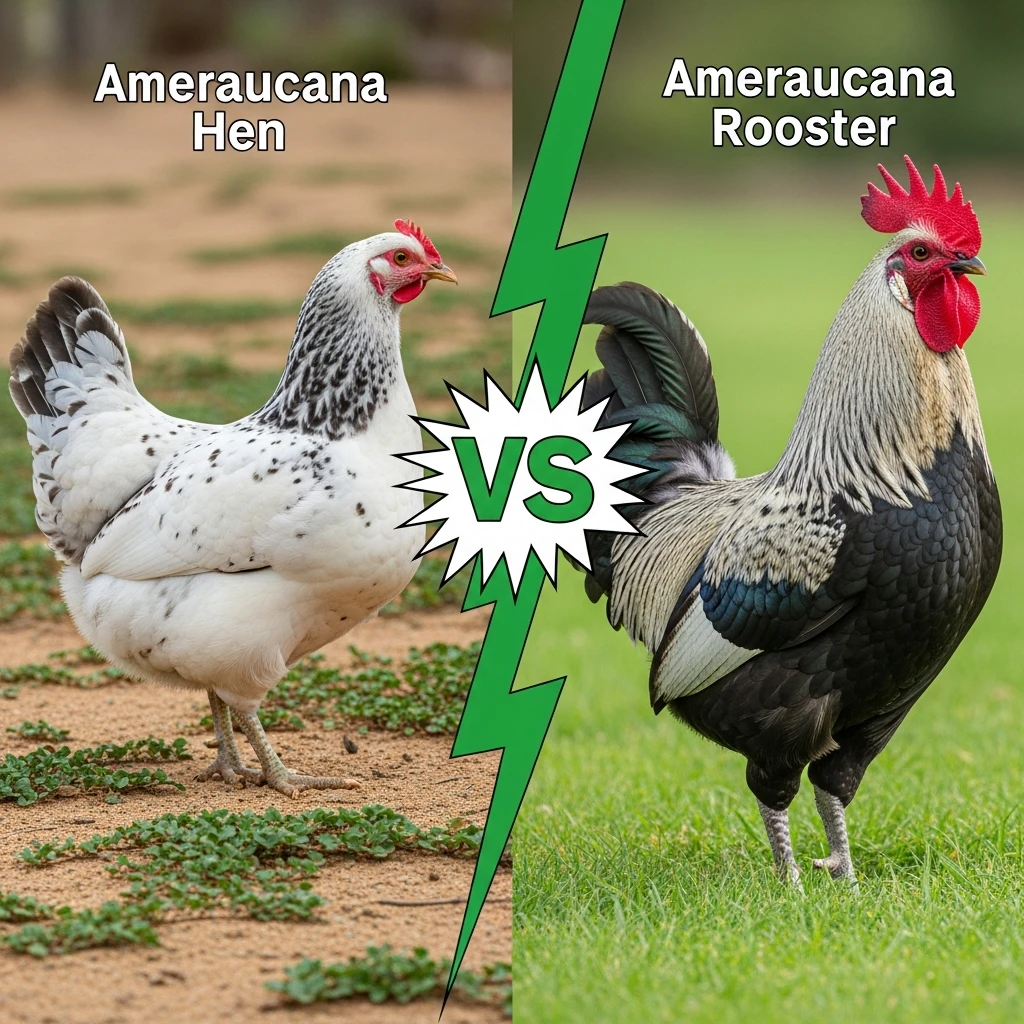

When it comes to discovering chicken breeds, there is one of the most famous and rare breeds called the Ameraucana. Understanding the differences between the Ameraucana rooster and Hen will help you understand important aspects of these 2 chicken breeds, as there is a very thin difference between them. The Arcauna breed is the ancestor of Ameraucanas, which are well-known for their vibrant eggs. Both Olive Eggers and Easter Eggers are hybrid breeds with Ameraucana ancestry. Whether roosters or hens, Ameraucanas are renowned for their beautiful feathers.
Let’s go through this amazing, informative guide that will unlock the key factors that distinguish Ameraucana roosters from hens.


About the Ameraucana Rooster: The rarest breed
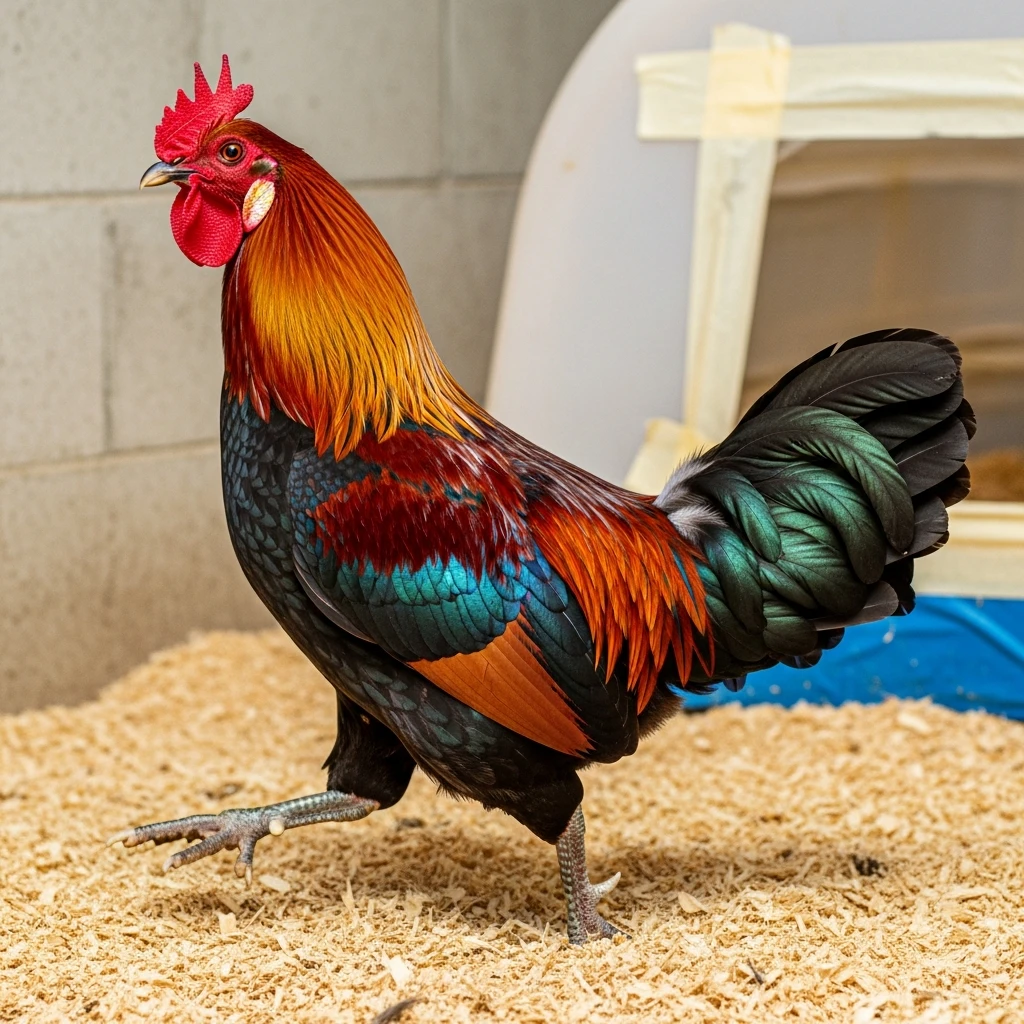
Before we dive deep into the topic of Ameraucana vs. Hen, it is important to understand the Ameraucana breed. Ameraucanas grow really quickly, and if this is your first time with them, you will notice when their feathers begin to appear and when they take on distinct personalities much sooner than you might anticipate. But don’t be impatient. A watched kettle never boils, after all.
Although three months may seem like a long time, this is when the Ameraucana hen-versus-rooster debate begins to take shape. The story is told by the feathers. The downy fuzz you’ve seen thus far is not at all like the feathers that emerge on the hens at this stage.
Facts about the Ameraucana Rooster
After taking an overview of what it is all about, there are some amazing and shocking facts about the Ameraucana that will blow your mind and give you deep knowledge of this unique breed.
They have slate-blue legs, reddish-brown eyes, and a “chipmunk-like” face with bushy beards and earmuffs.
Comb Type: To help prevent frostbite in cold temperatures, they have a small, tight, triple-ridged pea comb.
Hardiness: They may thrive in both hot and cold environments.
Color Varieties: Black, blue, blue wheaten, brown red, buff, silver, silver wheaten, and white are among the colors recognized by the American Poultry Association.
Distinction: Pure Ameraucanas have a certain level of perfection, but they are sometimes mistaken for “Easter Eggers,” which are mixed-breed chickens.
Temperament: According to this source, they are often peaceful and submissive, making excellent flock leaders.
Physical characteristics: Ameraucana roosters have a full tail and are not susceptible to the same breeding, health, or hatching problems as the rumpless, tufted Araucana.
Ameraucana Rooster Vs Hen: Differences on various bases!
Now we are going to discuss the most-awaited part of this informative guide: the actual differences between these two prominent chicken breeds and what makes them unique. Here, we will cover various aspects to help you understand their major differences, and this will also unlock some characteristics of both that we sometimes ignore.
Whether the objective is egg production, breeding, or harmony, understanding these distinctions helps poultry caretakers select the ideal balance for their flock. In the end, each Ameraucana rooster and hen makes a distinct contribution to the allure, efficiency, and genetic robustness of this cherished breed.
Variety of Ameraucana Rooster: Different and Beautiful Colors
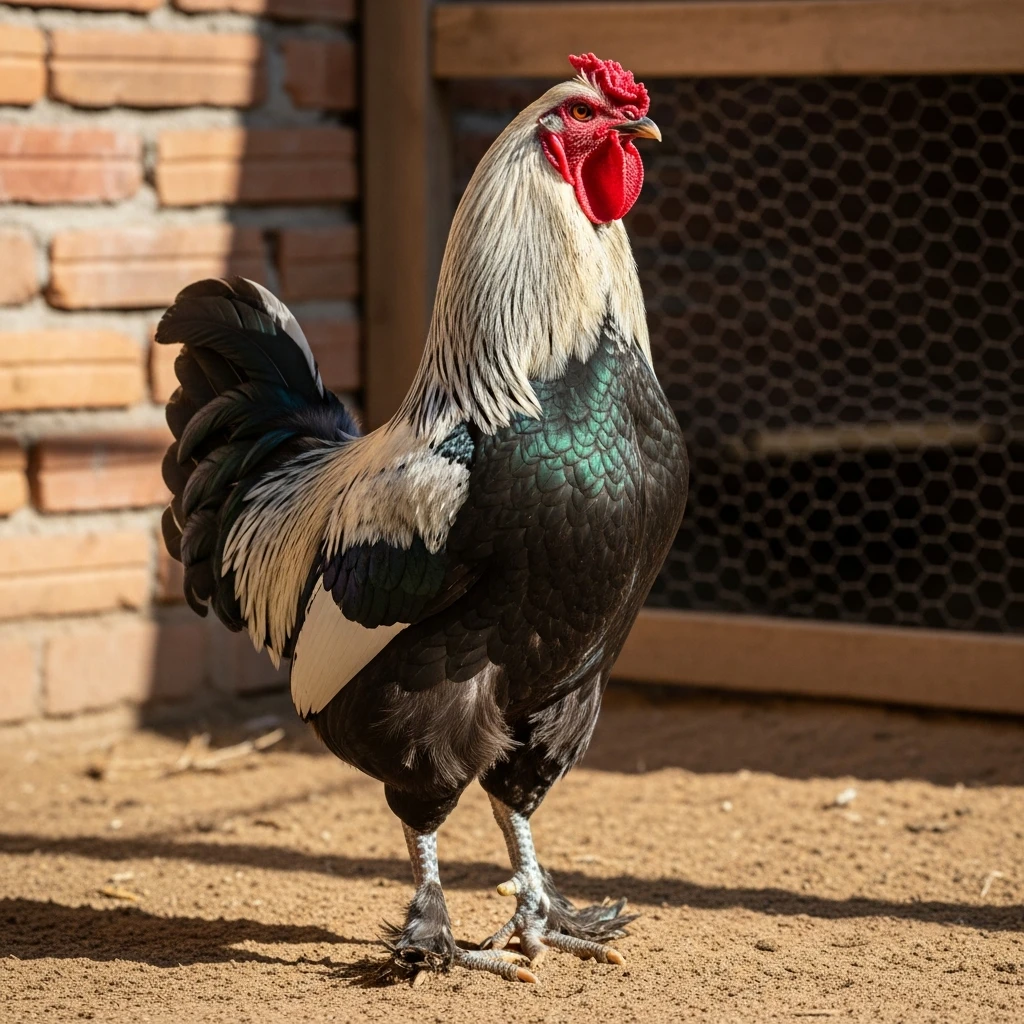
You would be surprised, but yes, indeed, this amazing breed has not come into this world of various species in just one color, but in various colors that clearly distinguish it from a hen.
Here, there are only 8 major colors in which you can see the Ameraucana breed, whereas the hen is bred in hundreds of colors.
Colors of Ameraucana:
- Blue: The wings and tail of the Blue Ameraucana have tiny black patches on their dark grey feathers. They have either black or grey feet.
- Blue Wheaten: The majority of the feathers in this color are white. Their head, wings, and tail are all wheaten-colored and dark brown. Their legs are slate blue.
- Wheaten: Most of their feathers have a pale tan hue that resembles wheat. They have dark blue legs.
- Brown Red: They have rust-colored, brown-red feathers. Their legs are bright in color.
- Buff: They have darker brown characteristics and yellow feathers. Their legs are light.
- Silver: They have light grey feathers with darker grey patches on their heads, wings, and tails.
Colors of Hen:
- White, pure white feathers (White Leghorn, for example)
- Brown, ranging from pale to dark brown (common in farm and Desi hens)
- Black, glossy, or solid black
- Deep rust or mahogany tones in red or reddish-brown
- Light golden or yellowish, such as Buff Orpington
- Soft shades of grey or blue
- Brown or white with black dots that are speckled or spotted
- Golden or multicolored: a combination of black, brown, and gold
Sounds They Produce
Although roosters are well-known for their traditional crowing, this behavior isn’t limited to the morning. They crow because they feel like it, to assert their dominance, or to defend their hens.
Hens also have their own language. They cluck most of the time, sometimes to express happiness and other times when something is wrong. Typically, their voices are a little quieter.
Behavior and Lifespan
Depending on their breed and level of care, hens and roosters can live for several years. While roosters can occasionally become a little testy, particularly if they are overcrowded or simply have a feisty attitude, hens usually lay eggs for a few productive years.
Over the years, they rehome a few roosters (and even a few hens) because they became too combative. Hearing him crow in the morning is a unique experience. It simply feels like home.
Conclusion
In conclusion, Ameraucana roosters and hens have quite different functions within the flock, yet share similar breed characteristics, including their fluffy appearance, pea combs, and slate-blue legs.
Hens are slightly smaller, calmer, and appreciated mostly for their reliable production of stunning blue eggs, whereas roosters are typically larger, more colorful, protective, and frequently exhibit assertive behavior and leadership tendencies.